When we started thinking about Frontier Mode, we were not interested in building another news website.
There are already enough places publishing headlines, funding announcements, event recaps and technology updates. What we felt was missing was something more deliberate: a publication that pays attention to the people, ideas and products while they are still being built.
Too often, we only hear about a founder once the company has raised capital. We discover an innovator after an award. We notice a product after it has gained traction. We start paying attention to a gamer when they are already competing on a major stage.
But the most interesting part of almost every story happened before that moment.
It happened when someone was still experimenting.
When the first version did not work.
When the team was small.
When the prototype looked nothing like the finished product.
When there were more questions than answers.
That is the space Frontier Mode wants to document.
We want to spend time with the founders, developers, engineers, designers, gamers, researchers, creators and innovators who are actively shaping what comes next. Not simply once the world has validated what they are doing, but while the work itself is still happening.
For us, the word frontier is important.
A frontier is the point where the familiar ends and something new begins.
It could be a new technology.
A new business model.
A product being developed in a university laboratory.
A young entrepreneur trying to solve a problem in their community.
A startup attempting to enter an industry dominated by much larger companies.
A gaming team trying to turn competitive play into a profession.
Or simply a person asking whether something can be done differently.
Those are the stories that interest us.
And although our starting point is Africa, our ambition is not to treat African innovation as a novelty.
There is sometimes a tendency to talk about African technology through one of two extremes. Either everything is described as revolutionary, or innovation is framed almost entirely through the challenges people face.
Reality is more interesting than either version.
Building here can be difficult.
Access to capital remains uneven. Technology can be expensive. Specialist skills are not always easy to access. Infrastructure matters. Geography matters. Networks matter.
But none of those realities have stopped people from building.
Across our universities, communities, businesses, laboratories, gaming spaces, workshops and startup ecosystems, there are people quietly developing products and ideas that deserve serious attention.
We want Frontier Mode to give those stories the space they deserve.
That also means looking beyond funding.
Capital is important, but a startup ecosystem is much bigger than investment rounds.
We want to talk about the product.
The engineering.
The customer.
The design decisions.
The first prototype.
The failures.
The intellectual property.
The people joining the team.
The partnerships that made something possible.
The institutions supporting innovators.
And sometimes the very simple question of why somebody decided to build something in the first place.
Products will be a major part of what we cover.
There is something powerful about the moment an idea becomes real enough for another person to experience it.
Whether it is software, hardware, a game, an AI product, a fintech platform, a research technology or a physical prototype, we want to create a place where new products can be properly introduced, explored and documented.
The same applies to gaming and esports.
We see gaming as part of the broader technology and youth culture landscape, not as an isolated category.
Esports brings together competition, technology, entertainment, hardware, content creation, community and business. Africa's gaming ecosystem is still developing, and that makes this exactly the right time to document it.
We want to meet the players before the stadiums get bigger.
We want to see the teams being formed.
We want to cover the tournaments, communities and businesses helping that ecosystem grow.
And we want video to become an important part of how we tell all these stories.
Sometimes an article is enough.
Sometimes you need to see the room.
You need to see the prototype.
You need to hear the founder explain the idea themselves.
You need to walk through the event.
You need to see what happens inside the workshop, laboratory, office or gaming arena.
That is why Frontier Mode will combine editorial writing with photography, interviews, vlogs, event coverage and documentary-style video.
Over time, I hope it also becomes something more than a publication.
I would like Frontier Mode to become an archive of this period.
A place where, years from now, somebody can look back and see what a company looked like when it was still small.
What its first product looked like.
What its founders were thinking.
What problems mattered at the time.
Which technologies were emerging.
Which communities were growing.
And which people were building long before everybody else started watching.
Because once organisations become successful, their beginnings often get cleaned up.
The uncertainty disappears from the story.
The early prototypes disappear.
The first websites disappear.
The small offices, strange ideas and difficult decisions become a few paragraphs in a company history.
I think there is value in documenting those moments while they are still real.
Frontier Mode itself will evolve as we learn.
We want it to become a place to discover startups, innovators, products, events and people. A place to watch conversations, follow companies as they grow and understand more deeply how innovation ecosystems actually work.
But the principle behind it will remain simple.
We want to pay attention early.
We want to document people who are building.
And we want to create a publication that feels as ambitious, experimental and forward-looking as the people it covers.
There are remarkable things being built around us right now.
Some will become important companies.
Some will become entirely different products.
Some will fail and lead to something better.
And some may quietly change an industry before most people realise what happened.
Our job is not to pretend we already know which is which.
Our job is to be curious enough to look.
Welcome to Frontier Mode.
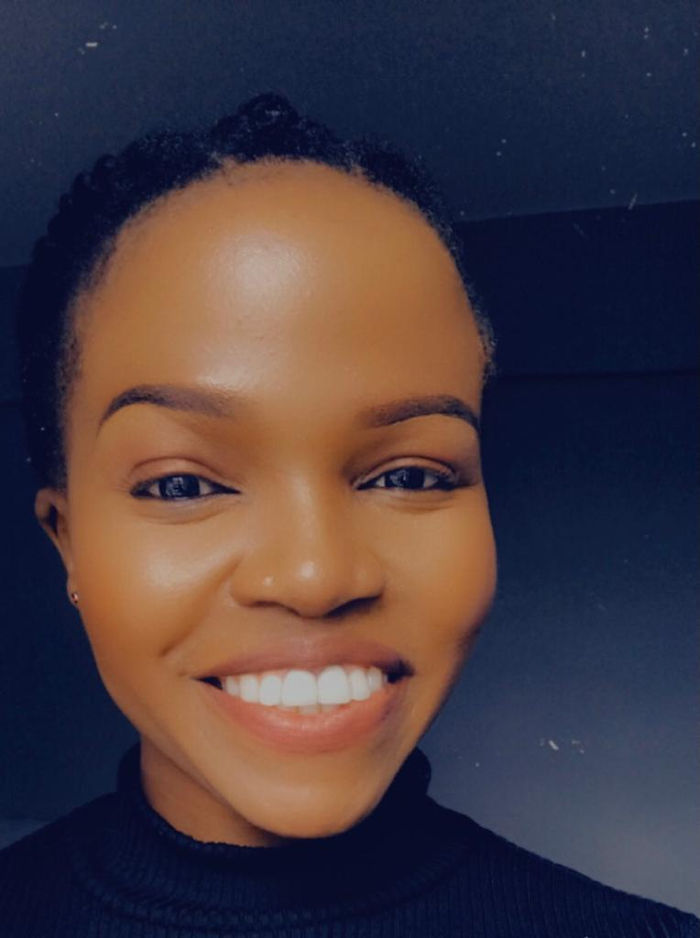
Mpho Mashego Founder, Frontier Mode
DOCUMENTING WHAT COMES NEXT_